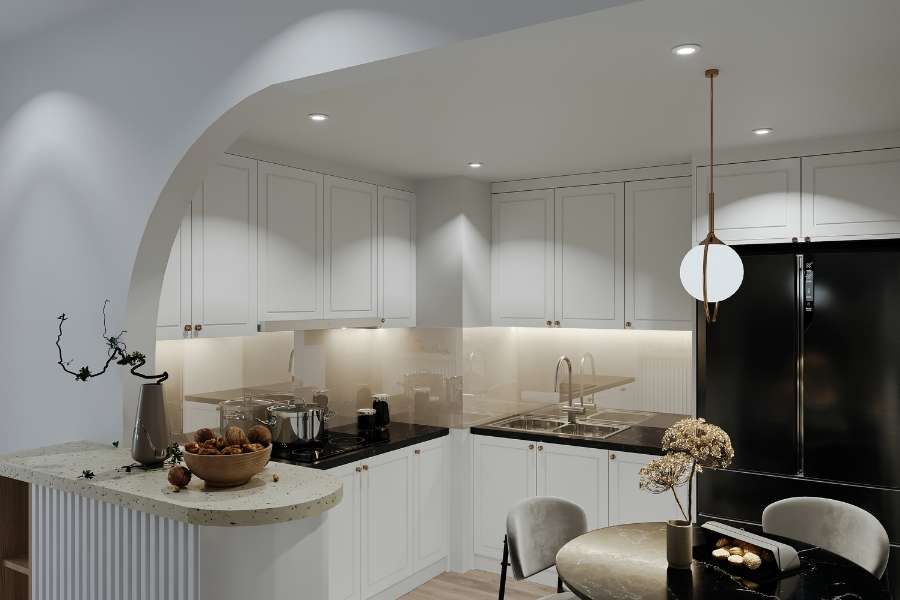
Have you ever walked into a home that instantly feels comforting? Statement lighting turns cold rooms into warm and welcoming sanctuaries. Bold fixtures bring character while casting a soothing glow across your space.
Creating a cozy environment requires balance and good planning. Oversized chandeliers look amazing, but harsh light ruins the entire mood. You must pair bold shapes with soft bulbs to get great results.
Why Statement Lighting Transforms Your Home Environment
Light changes how we feel inside our homes. Evolutionary biology makes us seek warm sunset colors to unwind every evening. Bright office lights keep us alert, but warm light signals pure comfort. Using statement lighting gives people a natural place to gather. These central pieces spark quick conversations and make guests want to stay longer. Exploring fresh ideas from Lighting Concepts helps homeowners choose dramatic pieces that fit their space effortlessly.
Eye-catching shapes work best when paired with gentle bulb tones. Spatial warmth depends heavily on light temperature rather than raw brightness. Soft light diffuses shadows across your living room floor. You can easily master this cozy feeling by learning basic lighting rules.
Understanding Color Temperature and Lumen Output
Picking the right bulb matters just as much as picking the fixture frame. Color temperature is measured on the Kelvin scale from cool blue down to warm gold. Living rooms and bedrooms need temperatures between 2200K and 2700K. Warm light shows off wood grains and soft fabrics beautifully.
| Kelvin Rating | Light Appearance | Ideal Room Application | Atmosphere Created |
| 2200K – 2400K | Candlelight Warm Gold | Bedrooms, Accent Corners, Evening Lounges | Intimate, Ultra-Cozy, Relaxing |
| 2700K – 3000K | Soft Warm White | Living Rooms, Dining Areas, Foyers | Welcoming, Balanced, Comfortable |
| 3500K – 4000K | Neutral Cool White | Kitchen Prep Zones, Home Offices, Garages | Energetic, Utility-Focused, Crisp |
| 5000K + | Daylight Blue | Art Studios, Commercial Workspaces | Alert, Clinical, High Contrast |
The Art of Layering: Ambient, Task, and Accent
Relying on one overhead light fixture is a very common mistake. Even the grandest chandelier feels stark when forced to work alone. Professional interior designers build mood by mixing three different lighting layers. These layers include ambient general light, targeted task light, and accent spotlighting.
Spreading warm ambient lighting across these layers eliminates dark corners. Primary centerpieces draw early attention while secondary table lamps fill background space. You gain total control over room energy throughout your entire day.
Lighting serves as functional jewelry for your home. One stunning centerpiece draws eyes, but soft secondary layers create true comfort.
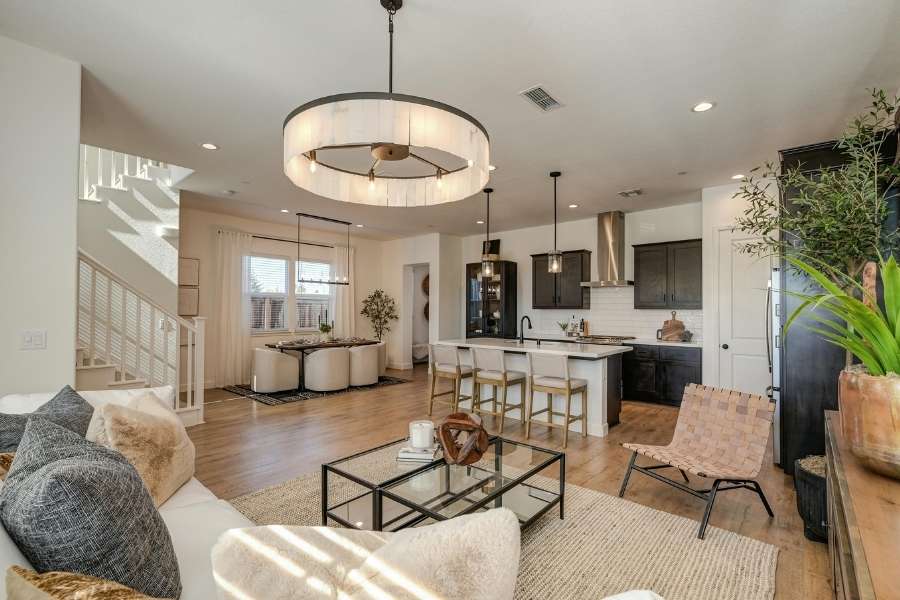
Choosing Statement Light Fixtures for Every Living Space
Rooms have different needs, so your light choices must adapt. Dining chandeliers need different hanging heights than tall living room floor lamps. Picking statement light fixtures requires measuring room dimensions and watching daily foot traffic. Each space gains a distinct identity while keeping a clean overall design. Poorly scaled lights remain common interior design mistakes that make your home look smaller, so selecting proper proportions keeps rooms feeling airy.
Materials interact with nearby walls and existing furniture. Natural brass, matte black metal, blown glass, and woven rattan weigh differently visually. Matching your fixture material to home details makes bold choices feel planned.
Living Room Illumination that Captures Attention
Living rooms host party nights, movie marathons, and quiet reading hours. Designing great living room illumination begins with your central seating area. Geometric pendants and multi-arm chandeliers anchor seating arrangements effortlessly.
Homeowners seeking warm and inviting living room lighting ideas should try frosted glass and linen shades. Warm brass interiors bounce light rays smoothly without hurting your eyes. Pairing main ceiling fixtures with dimmers helps you lower brightness quickly every evening.
Dining Room and Kitchen Centerpieces
Dining tables offer a great canvas for bold light displays. Linear fixtures and glass globes cast focused light over dinner plates while framing conversations nicely.
- Keep clearance between 30 and 36 inches above dinner tables.
- Choose fixture widths 12 inches narrower than table edges.
- Hang two or three pendant lights over kitchen islands.
- Install wall dimmers to adjust brightness during evening meals.
Bedrooms and Sanctuaries
Bedrooms need extra care because these spaces promote deep rest. Swap basic ceiling lights for designer lighting ideas like woven drums or alabaster mounts.
Mount luxury lighting accents on both sides of your bed. Low-hanging pendants replace traditional bedside lamps and free up nightstand table space.
Mastering Placement and Proportions for Impact
Great fixtures fail to impress when sized incorrectly for your room. Small fixtures get lost in high ceilings, while huge lamps feel overwhelming in tiny hallways. Knowing how to create a cozy atmosphere with lighting depends on math proportion rules.
Measure room length, width, and ceiling height before buying expensive fixtures. Interior designers use basic sizing formulas so new lights fit perfectly.
| Installation Area | Dimensional Sizing Rule | Ideal Clearance / Hanging Height | Design Tip |
| Living Room Center | Room length (ft) + width (ft) = Fixture diameter (in) | Minimum 7 feet from floor to fixture bottom | Center above coffee table if ceiling height is limited |
| Dining Table | 1/2 to 2/3 the total width of the dining table | 30 to 36 inches above table surface | Keep fixture centered directly over table centerline |
| Entryway / Foyer | Scale up by 10-15% to fill vertical volume | Minimum 7 feet clearance above entry door swing | Choose open frame designs for small entry foyers |
| Kitchen Island | Space pendants 24-30 inches apart | 30 to 36 inches above countertop surface | Use odd numbers (3 pendants) for visual balance |
How to Use Designer Lamps for Ambiance
You do not need an electrician to fix home lighting. Portable floor lamps and table lights offer easy ways to test designer lighting ideas. Placing lamps in dark corners turns empty spots into cozy reading nooks.
When learning how to use designer lamps for ambiance, watch where shadows fall on furniture. Arch lamps curve nicely over reading chairs, while matching table lamps frame wall art. These light sources break open rooms into warm micro-zones.
Select lamps with solid shades or soft glass diffusers to protect your eyes. Fabric drums and frosted globes scatter light into soft pools.
| Shade / Diffuser Material | Light Output Character | Ideal Ambiance Goal | Maintenance Level |
| Opal / Frosted Glass | Smooth, even, 360-degree diffusion | Effortless cozy interior lighting without glare | Low (simple dusting) |
| Linen / Woven Fabric | Warm directional glow with textured side output | Soft, organic room warmth | Medium (vacuum brush) |
| Natural Rattan / Cane | Patterned shadow interplay across walls | Bohemian, coastal relaxation | Medium (compressed air) |
| Polished Metal / Brass | Strictly downward or upward directional spotlighting | High-drama focal points and task work | Low (metal cleaner) |
Real-World Transformation Example
An old stone cottage featured dark oak beams and high plaster walls. The room felt cold and gloomy despite having several overhead spotlights installed.
The owners replaced cold spotlights with a large iron ring chandelier holding 2400K LED bulbs. They added two brass floor lamps and twin blown-glass table lamps. Mixing warm lighting design across different heights turned a cold room into an inviting sanctuary.
Try these four practical steps to improve your home lighting today:
- Add dimmer switches to control room brightness anytime.
- Mix metal fixtures with linen shades or smoked glass.
- Place small lamps inside dark bookshelves or on mantels.
- Use warm 2200K to 2700K bulbs across connected rooms.
Arranging decorative home lighting with care transforms ordinary spaces into cozy places. Matching bold statement lighting with soft background bulbs keeps your home stylish and comfortable.
FAQ
Can statement lighting work in small rooms with low ceilings?
Yes, statement lighting works great in small rooms when scaled properly. Choose semi-flush mounts or wide flush ceiling lights made of brass or glass. Flush fixtures add high visual style without stealing headroom, making them the best statement lights for modern homes with lower ceilings.
How do I choose the right bulb wattage and light output for my room?
Multiply your room square footage by 10 to 20 lumens to find total lighting needs. A 150-square-foot living room needs about 1,500 to 3,000 total lumens across all fixtures. Divide this brightness between central fixtures and accent lamps using warm 2700K bulbs.
How can I combine different metal finishes without making the room look cluttered?
Select one main metal finish to cover 60% of your room fixtures. Add a secondary contrast metal for smaller sconces or table lamp bases. Keeping shade materials consistent with white linen or frosted glass unifies mixed metals easily.
What is the best way to light a dark living room corner?
Combine vertical height with soft diffusion to brighten dark corners. Position a tall floor lamp in the corner with a warm 2700K bulb. You can also install an adjustable wall sconce over a chair to turn dim spots into cozy nooks.
Look around your living room tonight and find a cold or dark corner. Swap in a warmer bulb or add a stylish lamp to change your mood fast!