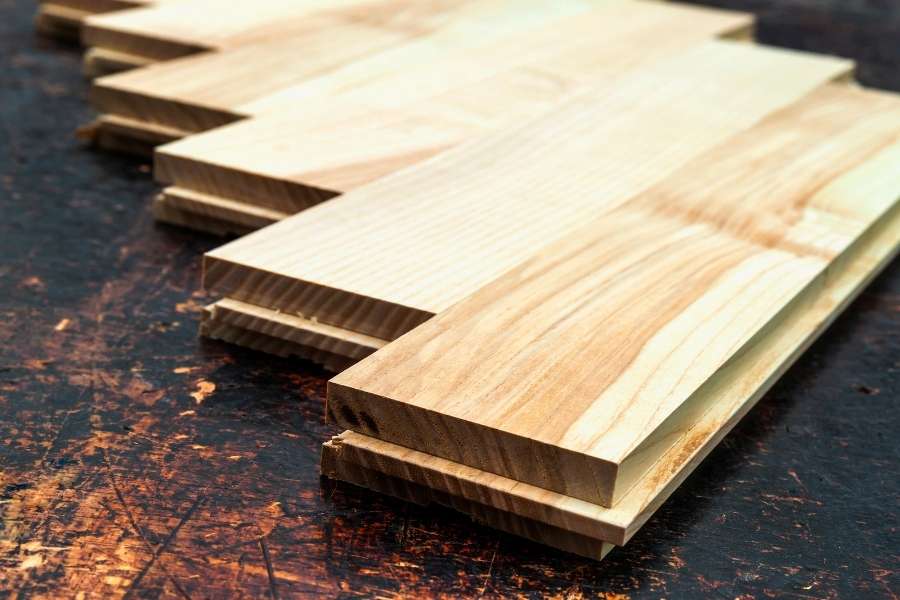
Woodworking is a journey of precision and patience. You start with raw lumber and sharp tools. Every sturdy piece of furniture relies on wood joints. These connections act as the skeletal system of your build. Choosing the right timber connection ensures your project lasts. Poor joinery leads to wobbly tables and broken frames. Mastering these woodworking basics changes everything for a beginner.
Imagine your project as a puzzle that needs to stay together. Some wood joints are purely decorative and look beautiful. Others provide the massive joint strength needed for heavy benches. You must learn the balance between form and function. This guide simplifies the complex world of carpentry for you. Let us explore the most reliable joinery joints available today.
The Humble Butt Joint: Your Entry Point into Woodworking
The butt joint is the simplest way to connect two boards. You simply press the end of one board against another. It is a very common timber connection for fast builds. However, it is structurally weak on its own. Glue does not stick well to porous end-grain fibers. You should use this for simple decorative crafts.
For projects requiring more durability, consider exploring reinforced mesh concrete for structural foundations. While wood needs screws, heavy builds need steel and stone. You can strengthen a butt joint with metal brackets. Many beginners start here to practice making square cuts. It is the first step in learning woodworking basics.
Mastering the Miter and Lap Joints for Clean Lines
A miter joint hides ugly end-grain by using angles. You cut two boards at exactly 45 degrees each. They meet to form a perfect 90-degree corner. This is the standard for high-quality picture frames. It looks professional but needs a very steady hand. Accuracy is the secret to a gap-free finish.
Learning to craft beautiful joinery requires the right set of tools. High-quality saws make these types of joinery joints much easier. The lap joint is another great option for beginners. It involves removing half the wood from each board. This creates a large surface for the glue to bond. It offers much better joint strength than a miter.
The Versatility of the Pocket Hole and Biscuit Joints
The pocket hole joint has changed modern furniture making. You drill a hole at a very steep angle. A special screw then pulls the boards tightly together. It is among the most common wood joints for beginners. You do not need to wait for glue to dry. This allows you to finish projects in record time.
The biscuit joint is perfect for aligning large flat panels. You cut a small slot in both board edges. A compressed wooden “biscuit” sits inside these slots. When glue is added, the biscuit expands slightly. This keeps your table tops perfectly flat and even. It is a staple in modern cabinetry workshops.
The Gold Standard: Mortise and Tenon Joints
The mortise and tenon is a true classic in woodworking. One piece has a hole called a mortise. The other piece has a tongue called a tenon. They fit together like a lock and key. This is the strongest wood joint for furniture making. It has been used for thousands of years.
You can learn how to cut a mortise and tenon joint by hand. It requires a sharp chisel and a mallet. The fit must be snug but not too tight. This joint handles heavy weight without breaking or swaying. It is the backbone of high-quality dining tables. Proper execution shows real skill in carpentry.
The Elegance and Strength of the Dovetail Joint
The dovetail joint is a symbol of fine craftsmanship. It features interlocking “tails” and “pins” that look like birds. This mechanical design makes it nearly impossible to pull apart. It is the premier choice for making high-end drawers. The joint gets tighter as you pull the handle.
Beginners often find the dovetail joint quite challenging at first. It requires extreme precision with a fine-toothed saw. You can use a router jig for faster results. However, hand-cutting them is a very rewarding experience. It remains a vital part of woodworking basics. Your projects will instantly look more expensive.
Frequently Asked Questions about Wood Joints
What is the easiest wood joint for a total beginner?
The butt joint is the absolute easiest to learn. You only need to make straight cuts. For furniture, try the pocket hole joint next. It is very forgiving and very fast. You will see results almost immediately.
Which joint is the strongest for a heavy workbench?
The mortise and tenon is the strongest choice available. It resists the “racking” forces that cause wobbling. This timber connection provides the most glue surface area. Your workbench will remain rock solid for years.
Do I really need glue if I use screws?
Yes, you should always use wood glue with screws. Screws hold the wood while the glue dries. The glue creates a permanent chemical bond. Without glue, the screws will eventually work loose.